A coupon code looks harmless. Copy the text, paste it into a chat, and someone saves 15%. But coupon codes and secure messaging intersect in ways most people miss: the message may reveal what someone plans to buy, which account they use, where they work, or which merchant is currently handling a sensitive order.
Teams think the problem is whether the coupon itself is confidential. The real problem is the context attached to it: tracking URLs, screenshots, purchase details, identities, timestamps, device notifications, and records that remain long after the discount expires.
This is not an argument for treating every promo code like a cryptographic key. It is a workflow decision about sending only the necessary information through an appropriate channel. As a guest contribution from the team at c0upons.com, this guide combines practical deal-sharing habits with the privacy controls expected by encrypted messaging users in 2026.
Table of contents
- Why coupon code sharing is a privacy workflow
- What coupon code messages can expose
- Choose a channel based on sensitivity
- A secure coupon code sharing workflow
- Coupon links require separate handling
- Secure coupon codes for remote teams
- Implementation patterns for encrypted chat
- Common failure modes
- What works and what fails
- Putting coupon codes and secure messaging together
Why coupon code sharing is a privacy workflow
The code is usually not the sensitive part
Most public coupon codes are designed to circulate. A code such as AUTUMN15 may be visible on a merchant page, printed in an advertisement, or sent to thousands of subscribers. Encrypting that string does not make it more valuable or turn it into a secret.
The surrounding conversation can still be sensitive. Consider messages such as:
- “Use this for the replacement security keys we discussed.”
- “This should reduce the hotel cost for next week's client visit.”
- “The discount works on the medication in your cart.”
- “Apply this to the equipment order before finance closes the card.”
Each message exposes more than a discount. It may reveal health information, travel plans, procurement activity, customer relationships, or a purchasing deadline. The mistake teams make is classifying the message according to the least sensitive field—the coupon code—instead of the most sensitive context.
Start with a realistic threat model
The practical question is not, “Could an advanced attacker break the coupon?” It is, “Who should know about this purchase, and where could the message appear?”
A useful threat model considers:
- Other members of a large group chat
- People looking at lock-screen notifications
- Former employees with access to retained history
- Anyone receiving a forwarded message or screenshot
- Malicious websites embedded in coupon links
- Shared, unmanaged, lost, or compromised devices
- Merchant systems receiving tracking identifiers
For a public grocery promotion, the consequences may be trivial. For a one-time offer tied to an employee account or confidential project, they may not be.
Separate secrecy from data minimization
End-to-end encryption protects message content while it travels between authorized endpoints. It does not make every detail necessary, prevent recipients from copying content, or erase information already displayed on a compromised device.
Practical rule: Share the minimum information required to redeem the offer, even when the conversation is encrypted.
That changes the conversation. Instead of asking whether a channel is “secure” in the abstract, ask whether the message has the right recipients, retention period, device controls, and amount of context.
What coupon code messages can expose
Metadata can reveal intent
Message content is only one layer. Depending on the service and operating environment, communication can also produce metadata: sender and recipient identifiers, group membership, delivery timing, device information, and interaction patterns.
A single coupon message may not say much. A sequence of messages sent to a procurement group immediately before a product launch can reveal operational intent. A travel discount sent to a small executive chat may disclose a trip before anyone shares an itinerary.
Secure messaging should therefore protect more than the coupon text. Group design, contact discovery, identity handling, notification behavior, and retention all affect the privacy outcome.
Tracked links identify recipients
Coupon URLs frequently contain parameters used for attribution, email campaigns, affiliates, or account-specific offers. Some are harmless campaign labels. Others uniquely identify the intended recipient or connect a click with an existing customer record.
For example, this fictional URL contains more information than the destination requires:
https://shop.example/offer?code=SAVE20&utm_source=email&subscriber=84721&token=abc123
Forwarding it can expose the original recipient's campaign identifier or token. It can also cause another person's shopping activity to be attributed to the sender.
The safer option may be to send the plain code and the merchant's known domain separately. If the offer only functions through the personalized URL, treat the entire link as sensitive.
Screenshots and clipboards carry extra data
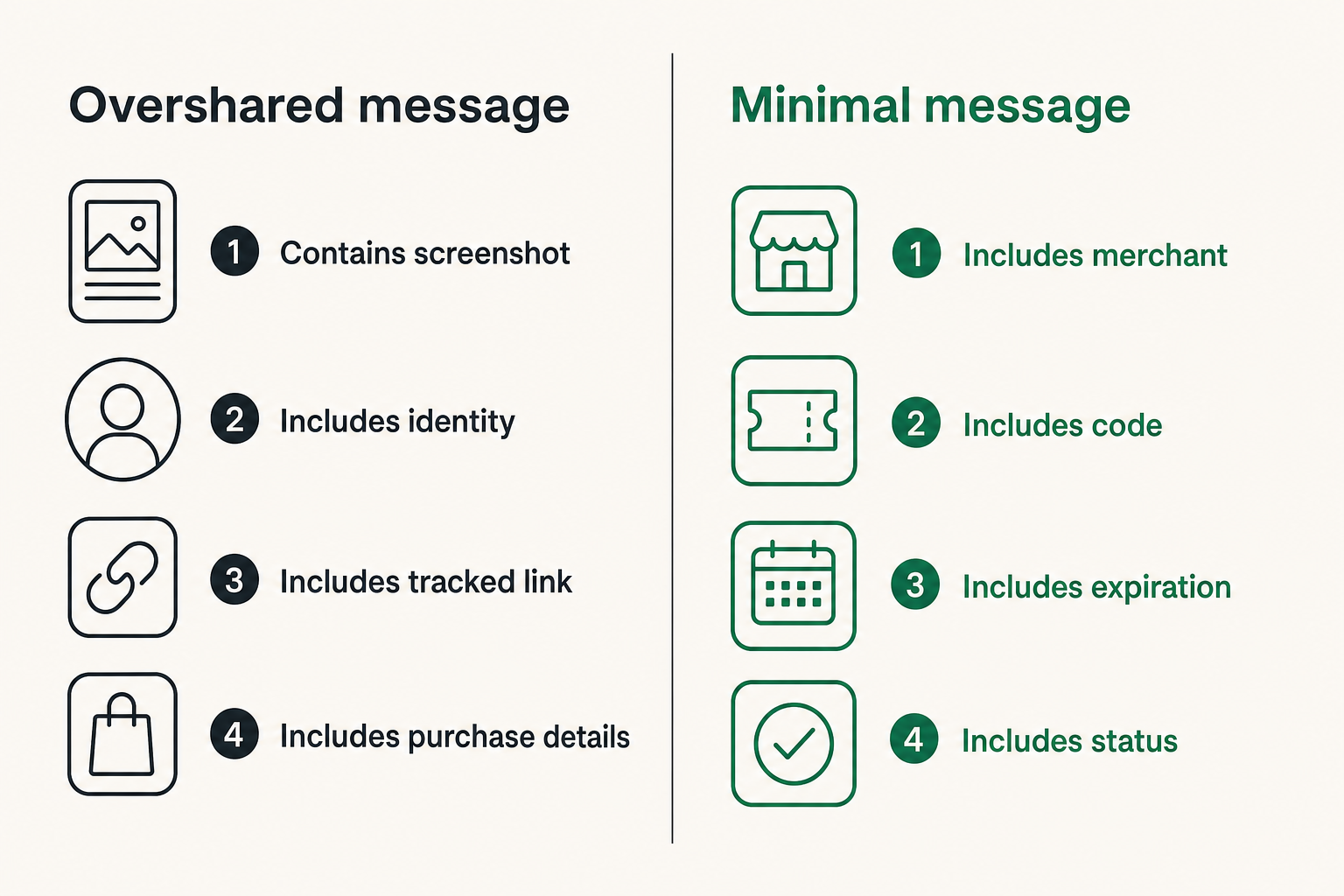
Screenshots are convenient but imprecise. They can include account names, browser tabs, order totals, shipping locations, reward balances, email addresses, or unrelated notifications. Image metadata and automatic cloud backups add more exposure.
Clipboards create a different problem. Mobile keyboards, clipboard managers, remote desktop tools, and device synchronization features may retain copied content. This matters most for single-use links, employee discounts, and codes associated with an account.
Practical rule: Prefer a short text code over a screenshot, and inspect every URL before copying it into a conversation.
Choose a channel based on sensitivity
Use a simple sensitivity model
Coupon sharing does not need an elaborate classification system. Three levels are usually enough:
| Level | Example | Primary risk | Appropriate handling |
|---|---|---|---|
| Public | Widely advertised seasonal code | Spam or malicious imitation | Verify the merchant; ordinary sharing is acceptable |
| Limited | Newsletter code or small group offer | Unwanted redistribution or purchase profiling | Send to intended recipients in a private conversation |
| Restricted | Single-use, employee, account-bound, travel, health, or client-related offer | Identity exposure, policy violation, account misuse | Use encrypted direct messaging, minimal context, and short retention |
Classification should follow the conditions and context, not how impressive the discount looks. A 5% employee code tied to an identity can require more care than a public 40% sale.
Match controls to the actual risk
For a public promotion, verification matters more than confidentiality. Confirm the destination domain, expiration date, exclusions, and whether the code was copied accurately.
For limited offers, recipient selection and retention become important. Avoid broad groups, and do not preserve an expired code indefinitely.
For restricted offers, consider all of the following:
- Direct rather than group messaging
- Verified recipient identity
- End-to-end encrypted delivery
- Disappearing or manually deleted messages
- No purchase description unless required
- No screenshots containing account details
- Confirmation when the offer has been redeemed
Encryption is one control in this stack. It is not a substitute for deciding whether the recipient is authorized.
Know when not to send the code
Some promotions explicitly prohibit transfer. Others are generated for a specific account, payment card, employee, or loyalty member. Sending those codes may violate merchant terms or workplace policy, regardless of the messaging channel.
If eligibility is uncertain, share the public promotion page or tell the recipient where to find the offer through their own account. Do not bypass restrictions merely because private delivery makes redistribution less visible.
Practical rule: Secure messaging should protect legitimate sharing, not conceal unauthorized use.
A secure coupon code sharing workflow
Verify before forwarding
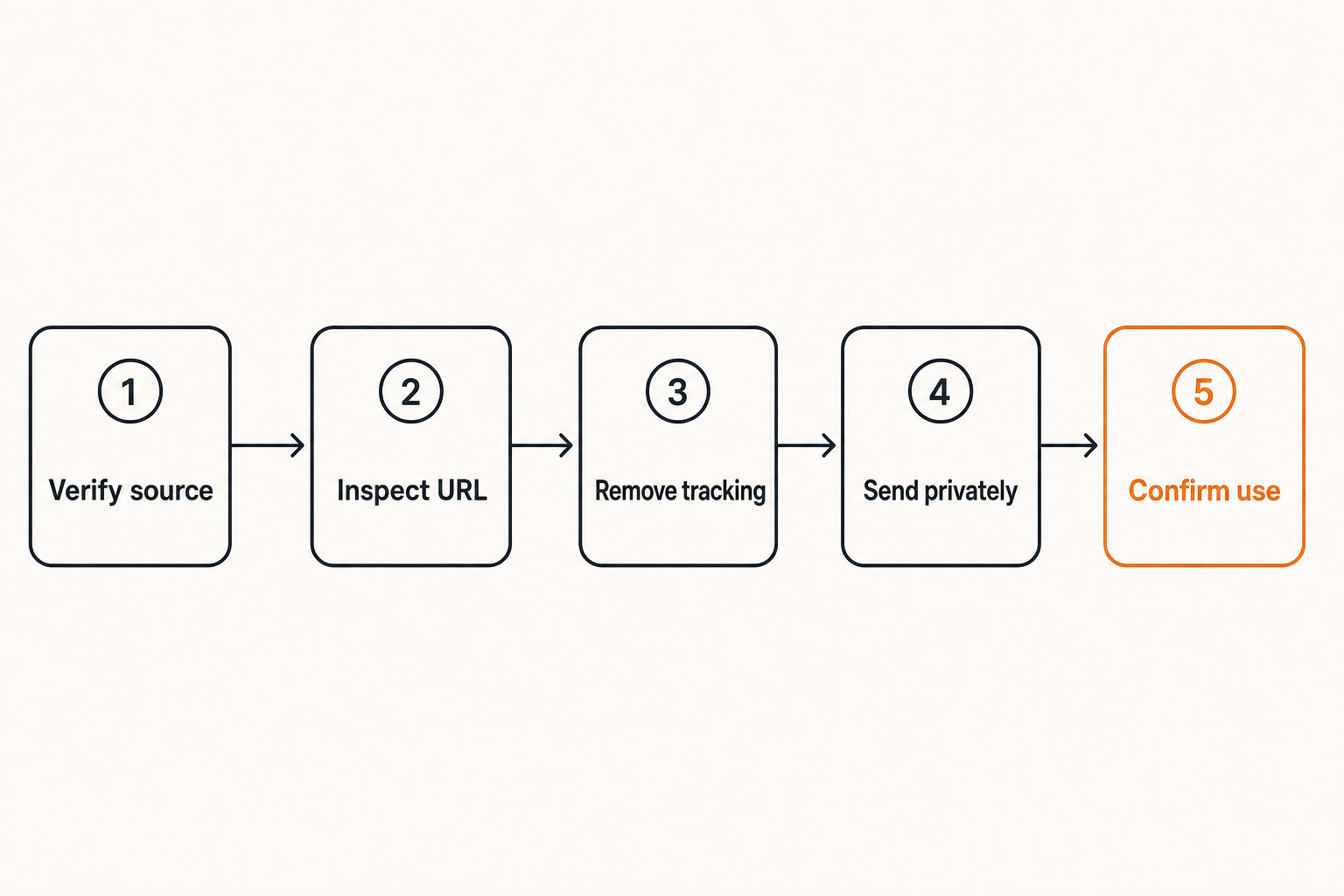
A reliable process starts before the message is composed. Confirm that the offer came from a merchant-controlled page, an expected email, or another source you trust. Search snippets and social posts can contain expired codes, altered domains, and fake support contacts.
Check four fields:
- Exact code or redemption link
- Merchant domain and eligible products
- Expiration time, including time zone if relevant
- Restrictions such as minimum order, region, account, or single use
Do not turn verification into a false assurance. A valid code can still lead to an unnecessary purchase, and a familiar brand name can appear in a deceptive subdomain.
Reduce the message to essentials
Once verified, construct a minimal message. A practical sequence is:
- Classify the offer. Decide whether it is public, limited, or restricted.
- Choose recipients. Include only people who can legitimately use or process it.
- Remove identifiers. Strip unrelated order data, names, campaign parameters, and screenshots.
- Send the essentials. Provide the merchant, code, expiration, and necessary restrictions.
- Confirm receipt. For single-use offers, avoid sending the same code through multiple channels.
- Resolve the state. Mark it used, expired, rejected, or still available.
- Delete when appropriate. Remove restricted content after the operational need ends.
A minimal message might look like this:
Merchant: Example Supply
Code: TEAM15
Expires: 30 Sep, 23:59 UTC
Scope: Accessories only; one use
Status: Available
It avoids discussing the project, budget, customer, or exact contents of the cart.
Close the loop after redemption
What breaks in practice is state management. Two people try the same single-use code, nobody knows whether it failed because of an exclusion, and the original message remains searchable for months.
Use a small status vocabulary: available, claimed, used, invalid, or expired. The recipient should update the sender when redemption succeeds or fails. For a team workflow, editing the original record is better than adding several contradictory replies.
This is where coupon codes start to resemble other operational tokens. The string may be simple, but ownership, state, expiration, and authorized use determine whether the process works.
Coupon links require separate handling
Remove unnecessary tracking parameters
When a coupon works as a normal code, send the code rather than the campaign URL. If a link is required, determine whether query parameters are essential.
Common analytics parameters such as utm_source, utm_medium, and utm_campaign often can be removed without changing the destination. Do not remove unfamiliar parameters blindly: some carry the discount or verify eligibility.
A safe manual test is to open the cleaned URL in a separate browser profile without an authenticated merchant session. Confirm that it reaches the expected domain and still presents the intended offer. Do not test one-time links this way, because opening them may consume or bind the promotion.
Inspect redirects and destination domains
Shortened URLs obscure the destination. Redirect chains can also pass through advertising and tracking systems before reaching the merchant. That does not automatically make a link malicious, but it prevents recipients from making an informed decision before clicking.
Prefer the merchant's canonical domain when possible. Check spelling carefully, especially around substituted characters, unexpected subdomains, and unusual top-level domains. A message claiming to offer a discount should never require the recipient to install remote-access software, disclose a password, or send a login code.
For teams, link inspection can be a controlled gateway step. However, automated scanners may activate single-use URLs or expose them to an additional service. Security tooling must respect the same sensitivity classification as the chat.
Treat personalized links as credentials
A bearer-style coupon URL grants its benefit to whoever possesses it. There may be no login prompt or secondary authorization. Functionally, that makes the link closer to a temporary credential than a public advertisement.
Send it directly to one verified recipient. Avoid generating rich previews, since preview services may fetch the link. Disable automatic link expansion when the messaging product allows it, and ask the recipient to confirm once the offer has been used.
Practical rule: If possession of a URL is enough to claim value, handle the URL like a short-lived access token.
Secure coupon codes for remote teams
Define ownership and permitted use
Remote teams commonly share software renewals, equipment discounts, travel offers, event registrations, and vendor credits. Informal sharing becomes messy when no one knows whether a code belongs to an individual, a department, or the company.
Assign an owner for restricted offers. The owner verifies eligibility, approves recipients, and resolves ambiguous redemption results. This does not require bureaucracy for every public sale; it provides accountability where misuse could create financial, contractual, or reputational issues.
A simple ownership record can include:
- Offer owner
- Authorized group or named recipient
- Expiration date
- Usage limit
- Current status
- Merchant restrictions
Do not store customer names, order contents, or full payment details beside the code unless the process genuinely requires them.
Keep purchasing details out of broad channels
A team-wide chat may feel private because outsiders cannot join. Internally, it is still a broad disclosure surface. Membership changes, exports happen, devices display previews, and new employees may gain access to old history.
Separate discovery from fulfillment. A general channel can announce, “A verified equipment promotion is available; contact operations.” The owner can then send the code and conditions directly to the eligible buyer. This pattern preserves awareness without publishing sensitive purchasing context.
The same principle applies to client-related orders. Mentioning a coupon in the channel where the order is being coordinated may expose the client's vendor, budget, location, or project timing to more people than necessary.
Build an auditable process without oversharing
Security teams sometimes respond by logging everything. That can create a second, more durable privacy problem. An audit record should prove that the process was followed without duplicating every sensitive message.
For example, record that an offer was verified, assigned, and closed at particular times. Store a reference identifier or a hash where appropriate rather than the complete personalized URL. Limit access to the audit record and define when it will be deleted.
Auditability and data minimization are compatible. The objective is enough evidence to resolve misuse or confusion, not a permanent archive of everyone's shopping activity.
Implementation patterns for encrypted chat
Use message templates
Templates reduce accidental disclosure and make status visible. A personal conversation may use a lightweight version, while a procurement team may require ownership and eligibility fields.
offer:
  merchant: "Example Supply"
  code_or_link: "TEAM15"
  classification: "limited"
  restrictions: "accessories; one use"
  expires_at: "2026-09-30T23:59:00Z"
  status: "available"
  owner: "operations"
Avoid placing the code in a reusable bot command if command history, application logs, or third-party integrations can capture it. Before adopting automation, map every system that receives the message.
Set retention by conversation type
Retention should match the useful life of the information. Public codes may remain in a deal-sharing room until they expire. Personalized and single-use links should disappear shortly after redemption. Workplace retention requirements may override deletion, but those requirements should be explicit rather than accidental.
Disappearing messages reduce persistence; they do not guarantee erasure from screenshots, backups, notification logs, or compromised endpoints. Recipients still need to understand the handling rule.
A sensible policy might be:
- Public deal room: retain until expiration, then remove or archive without personal context
- Limited group offer: retain briefly after expiration for issue resolution
- Restricted direct message: delete after confirmed use or failed redemption
- Audit event: retain only the minimal status fields required by policy
Control notifications previews and devices
A strongly encrypted message can still appear in plaintext on a lock screen. For restricted offers and purchasing context, disable notification previews or display only the sender's name. This is especially important on shared workstations, presentation devices, smartwatches, and managed phones visible to support personnel.
Device access also deserves attention. Remove old sessions, require a local unlock mechanism, apply operating system updates, and verify new device links through an independent signal when possible. If a recipient loses a device, revoking its session is more useful than deleting a message from the sender's screen.
The architecture is end to end. Transport encryption protects the middle; device hygiene protects both ends.
Common failure modes
Assuming encryption fixes the endpoint
End-to-end encryption prevents an intermediary from casually reading content in transit. It cannot prevent an authorized recipient from forwarding a code, malware from reading an unlocked device, or a camera from capturing the screen.
The mistake teams make is announcing that a chat is encrypted and treating every subsequent action as safe. Strong encryption is necessary for private messaging, but endpoint access, identity verification, and recipient behavior remain part of the system.
Another endpoint failure is account recovery. If recovery procedures are weak, an attacker may gain access without attacking the encryption protocol. Understand how devices are enrolled, how sessions are revoked, and what happens when a user loses access.
Posting first and cleaning up later
Deleting an overshared screenshot does not retract notification previews, downloads, exports, or copies. In large rooms, someone may act on an incorrect or ineligible code before a correction appears.
Draft the minimal message before posting. If a mistake occurs, state clearly what recipients should do: do not use the link, delete the downloaded image, or disregard the previous code. Then rotate or invalidate the offer if the merchant supports it.
Edits can also cause confusion. If the status changes from available to used, preserve a clear state indicator rather than silently replacing the code with another one.
Automating untrusted coupon intake
Bots that scrape promotions and post them into chat promise convenience. They also import untrusted text and URLs at scale. A malicious listing can exploit link previews, impersonate a merchant, or encourage users to enter credentials on a fake checkout page.
Automation should not collapse discovery, verification, and publication into one action. Use allowlisted merchant domains, normalize URLs, flag redirects, suppress automatic previews for unknown links, and require human review for restricted or unusually valuable offers.
Rate limits and retries matter too. A misconfigured integration can repost the same code repeatedly or send a private offer to the wrong channel after a failed lookup. Idempotency keys and explicit destination identifiers prevent many of these failures.
What works and what fails
What works in practice
The strongest workflow is usually the least dramatic. It combines a few controls that users can follow consistently:
- Verify the merchant and offer conditions
- Classify the code by transferability and context
- Choose the smallest appropriate recipient set
- Prefer plain text over screenshots
- Remove unnecessary identifiers and tracking data
- Use encrypted direct messages for restricted offers
- Update the redemption state
- Delete sensitive messages when their purpose ends
These controls address distinct problems. Verification reduces fraud. Encryption protects content in transit. Recipient limits reduce internal exposure. Retention limits reduce future exposure. Status updates prevent operational confusion.
What fails under real use
Overcomplicated classification systems fail because users cannot decide which of twelve labels applies to a grocery discount. Blanket deletion policies fail when a buyer needs to resolve a rejected order. Permanent archives fail because expired offers accumulate beside personal purchasing history.
Security theater also fails. Redacting two characters from a coupon does little if the remaining message includes a personalized link. Sending a password-protected document through the same chat as its password adds friction without meaningful separation. Calling a room “private” does not compensate for hundreds of members and indefinite retention.
A useful way to think about it is as proportional control: apply stronger handling when an offer is identity-bound, valuable, single-use, policy-restricted, or attached to sensitive context.
Measure workflow quality not message volume
Teams do not need dashboards showing how many coupon messages were encrypted. More useful indicators include:
- Percentage of restricted offers sent to direct rather than broad conversations
- Number of duplicate redemption attempts
- Number of expired offers still presented as available
- Incidents involving tracked or deceptive links
- Time required to revoke access after a device is lost
- Amount of sensitive context retained after an offer closes
These are operational measures, not vanity metrics. They reveal whether the process reduces confusion and exposure.
Do not collect more personal data merely to improve measurement. Aggregate counts and process checks are usually enough. A privacy workflow should not become a new source of behavioral profiling.
Putting coupon codes and secure messaging together
Where private messaging fits
Coupon codes secure messaging practices make the most sense when communication carries more sensitivity than the code itself. Private messaging provides a controlled route for direct delivery, particularly for account-bound offers, employee discounts, travel arrangements, procurement, and single-use links.
The UI is not the whole system. Message encryption, recipient identity, device access, link previews, notification settings, retention, and user behavior all determine the result. A polished lock icon cannot repair a workflow that sends the wrong information to the wrong group.
For privacy-conscious users and remote teams, qrypt.chat fits at the communication layer: a place to reduce broad exposure and keep sensitive coordination in an encrypted conversation. It should be paired with source verification, minimal messages, endpoint hygiene, and a clear redemption state.
A final operational checklist
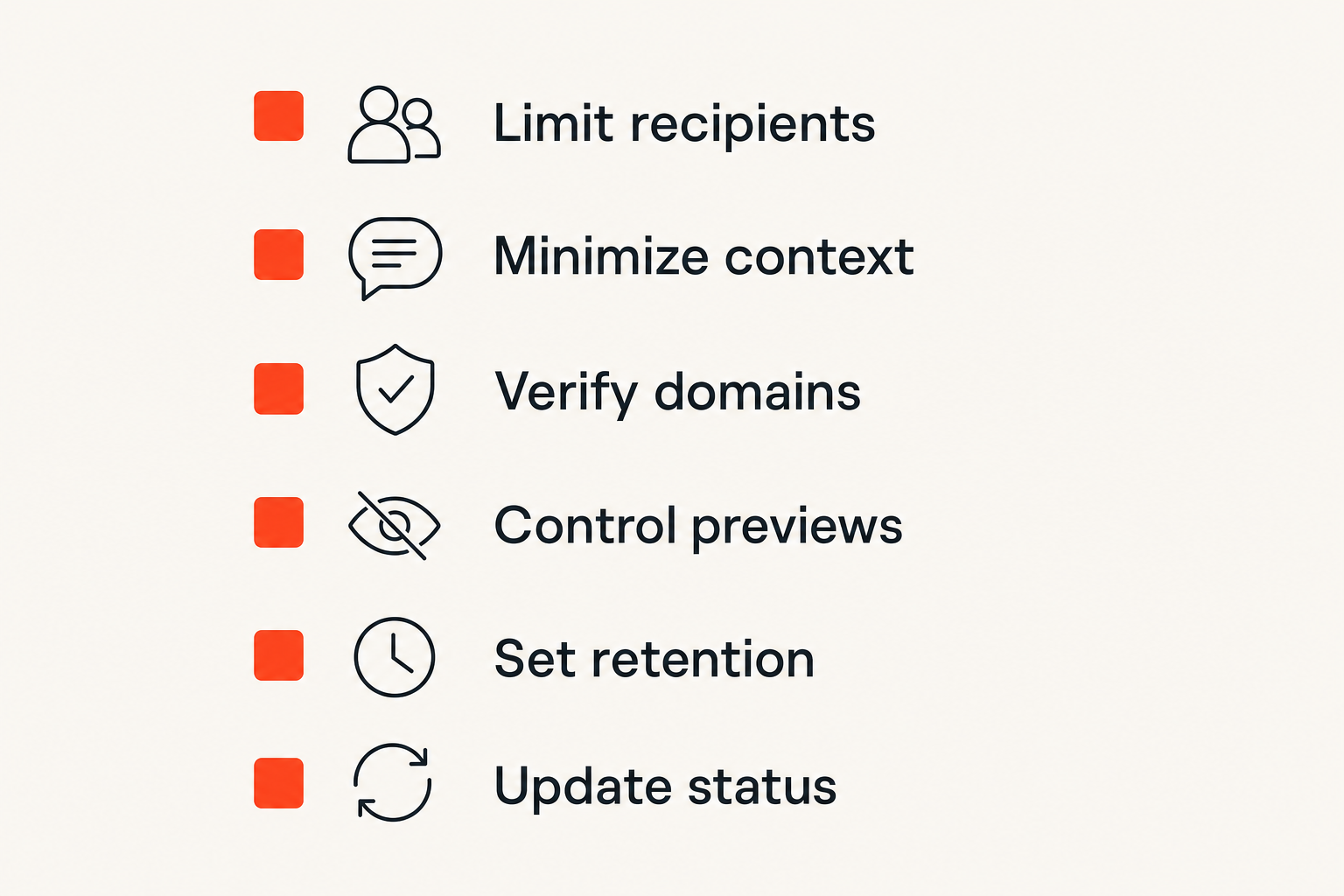
Before sending a coupon or promotion, ask:
- Is the offer public, limited, or restricted?
- Is the recipient eligible to use it?
- Have I verified the merchant domain?
- Can I send a plain code instead of a tracked URL?
- Does the message reveal a purchase, client, location, or identity unnecessarily?
- Am I using the smallest suitable conversation?
- Could a notification preview expose the context?
- Does the recipient know whether the offer is available or single-use?
- When should the message be deleted?
If these questions feel excessive for a public seasonal sale, use lighter handling. If the offer is personalized or tied to sensitive activity, answering them takes less time than resolving misuse later.
The closing principle is simple: coupon codes and secure messaging work well together when encryption supports a disciplined workflow. Verify first, minimize context, deliver to the right person, track state, and remove the message when its job is done.
Try qryptchat
Use private, encrypted messaging for sensitive coordination without treating every conversation as public infrastructure. Try qrypt.chat.